- Outdoor Clothing and Footwear

- All in the category Outdoor Clothing and Footwear
- Footwear

- Jackets

- Military Blouses

- Pants

- Functional clothing

- Sweatshirts

- Shirts

- Hawaiian & Lifestyle Shirts

- T-Shirts

- Shorts and Bermuda

- Overalls

- Caps and head coverings

- Gloves

- Socks

- Belts

- Suspenders

- Scarves, shawls, neckwear

- Raincoats, ponchos

- Women's clothing

- Children's clothing

- Clothing Care and Maintenance

- Patches & Insignia

- Vests

- Camping & Hiking

- All in the category Camping & Hiking
- Backpacks

- Bags, Cases & Waist Packs

- Sleeping in nature

- Cookers, grills

- Lighting a fire

- Outdoor Dishes and Tableware

- Dining in nature (Food for the journey)

- Survival kit

- Compasses

- Climbing equipment

- Flashlights

- Camping furniture

- Eye-glasses

- Telescopes

- Hydration

- Water purification

- Small Equipment and Essentials for Survival

- Electronics and accessories for mobile phones

- Watches

- Cases

- Paracords

- Wallets

- Towels

- Solar showers

- Waterproof notebooks

- Mosquito and Insect Protection

- Foot, hand, and body warmers

- Repair Kits and Adhesive Tapes

- Boating equipment

- Health, protection

- Tactical Gear

- All in the category Tactical Gear
- Plate Carriers and Tactical Accessories

- Load-bearing harnesses

- Tactical vests

- Tactical cases and pockets

- Ballistic protection

- Hearing protection

- Protection

- Tactical and military backpacks

- Tactical and combat belts

- Tactical Eyewear

- Flashlights for soldiers and police

- Helmets, coverage

- Camouflage

- Gas masks and protective equipment

- Medical equipment

- Boxes, cases

- Battering rams, crowbars

- Gear for dogs

- Shooting Gear

- All in the category Shooting Gear
- Shooting Glasses

- Weapon bags

- Shooting gloves

- Gun Cases

- Weapon Slings

- Optical sights

- Rangefinders

- Gun flashlights and lasers

- Cleaning, maintenance

- Gun waist bags

- Shooting bags

- Shooting mats

- Boxes and cases for ammunition

- Training equipment for shooting

- Bullet traps

- Speed loaders

- Knives and Tools

- Self-defence

- Firearms and Ammunition

- Other

- By interest


Sleeping Bag Liners and Bivy Bags: How to Choose the Right Bivouac Gear
When sleeping under the stars or operating on a multi-day training exercise, temperature is only part of the equation. The sleeping bag must remain clean and dry, stay accessible in the rain, and pack away quickly the following morning. A liner, bivy bag, or structured bivy shelter can each help, but they perform different roles. Before adding another layer to your sleep system, identify the problem you actually need it to solve.
Liners, Bivy Bags, and Bivy Shelters: What Is the Difference?
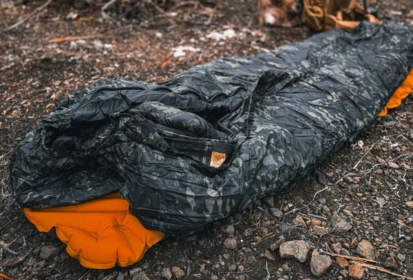
A sleeping bag liner goes inside the bag; a bivy bag protects it from the outside. The terms bivy bag, bivouac bag, and bivouac sack generally describe a protective outer shell for sleeping in the field. Alongside simple unsupported sacks, there are hooped and pole-supported designs that create additional space around the head.

The sleeping bag provides insulation, the pad limits heat loss into the ground, and the bivy bag protects the system from the outside. Overall performance depends on how effectively these components work together.
The term bivouac properly refers to the overnight stay or temporary camp itself, but in equipment catalogs it is also commonly applied to shelters. When comparing products, focus on the actual construction, weather protection, ventilation options, and usable interior space.
| Equipment Type | Primary Function | Key Limitation |
|---|---|---|
| Sleeping Bag Liner | Separates the user and their clothing from the lining, simplifies maintenance, and may add insulation depending on its construction. | Provides no protection from rain, and a lightweight hygiene liner cannot replace a warmer sleeping bag. |
| Bivy Bag or Sleeping Bag Cover | Reduces wind exposure and protects the sleeping bag from external moisture and dirt. | Protection depends on the material, seams, and closure system. Condensation may develop inside. |
| Hooped or Pole-Supported Bivy Shelter | Keeps part of the shell clear of the face and creates a protected sleeping space. | Provides less room for movement and equipment than a conventional tent and still requires adequate ventilation. |
These components can be combined. A hygiene liner may be sufficient when sleeping indoors, an outer cover adds useful protection beneath a tarp, and a structured bivy shelter can make sense when sleeping without additional overhead cover. Carrying all three is worthwhile only when each serves a clear purpose.
How to Choose a Sleeping Bag Liner—and When to Use One
A sleeping bag liner captures some of the sweat, body oils, and dirt that would otherwise reach the bag’s lining. After the trip, it can be removed and is generally easier to wash and dry than the complete sleeping bag. This helps keep the bag clean and may extend the interval between washes—particularly valuable with frequent use or during a multi-day course.
That protection has limits. If you climb inside wearing saturated or heavily soiled clothing, a thin liner will not keep all moisture and dirt away from the bag. Perspiration and water vapor must still escape from the sleep system; a hygiene liner cannot eliminate them.
Can You Sleep in a Liner by Itself?
In sufficiently warm conditions, a lightweight sleeping bag liner can be used on its own as a basic sleep sack. You will still need a suitable sleeping pad and, depending on the location, protection from weather and insects.
Thin hygiene fabrics provide limited insulation. Stand-alone use should therefore be reserved for genuinely warm nights; a liner is not a substitute for a summer sleeping bag with a verified temperature rating.
Insulated Sleeping Bag Liners: How Much Warmth Do They Add?
When choosing a liner, distinguish between a lightweight hygiene liner and an insulated model. A thin fabric primarily protects the sleeping bag’s lining and provides a more comfortable surface against the skin. A fleece liner or heavier knit traps more air and can add meaningful insulation, but it will generally increase both weight and packed volume.
Do not automatically subtract a claim such as “adds several degrees” from your sleeping bag’s comfort rating.
The actual improvement in thermal comfort depends on the material, fit, moisture level, sleeping bag, and sleeping pad. A reliable figure for a specific system would require testing the complete setup; a general manufacturer claim does not create a new temperature rating.
An additional insulating layer can extend the practical range of a sleeping bag or make an unexpectedly cold night more manageable. If you are regularly cold in your existing system at the temperatures you planned for, however, address the sleeping bag’s thermal margin and insulation from the ground first. Another thin layer will not reliably compensate for either deficiency.
Which Sleeping Bag Liner Material Should You Choose?
Fiber type alone does not determine warmth, comfort, or drying speed. Fabric weight, structure, and fiber blend matter as well. A thin polyester shell fabric and a heavier polyester knit may serve entirely different purposes.
A synthetic sleeping bag liner made from polyester or nylon is often the practical choice when gear must be packed repeatedly and drying opportunities are limited. Consider its packed volume and fabric construction as well: a lightweight hygiene liner will perform differently from a heavier insulated model.
A cotton sleeping bag liner absorbs moisture and generally takes longer to dry once thoroughly wet. For repeated nights in damp conditions, the critical question is how long the complete fabric remains saturated. A polyester blend will behave differently depending on the fiber ratio and material construction.
A silk sleeping bag liner can offer low weight, compact packing, and a soft feel against the skin. Its thermal contribution depends on the weight and construction of the fabric. With blends, check the actual fiber content: pure silk and a predominantly cotton fabric may perform very differently even when both products emphasize silk in their names.
Read next: How to Choose a Three-Season Sleeping Bag: Temperature Ratings, Insulation, and Fit.


Sleeping Bag Liner Shape and Size: Mummy or Rectangular?
A liner for a mummy sleeping bag should follow the bag’s tapered shape to avoid excess fabric inside. A rectangular liner provides more room to move but may bunch up inside a narrow mummy bag. Larger dimensions are not always an advantage.
When testing the combination, lie inside it and bend your legs. The liner should not restrict movement before the sleeping bag itself does, pull tight across the knees, or force your feet into the end of the bag. If getting into it is difficult at home, it will not become any easier in the dark or inside a confined shelter.
With a zippered sleeping bag liner, it helps if the liner and sleeping bag open on the same side and both zipper sliders remain accessible. This is not essential to the function of every model, but it makes entry and exit considerably easier. Loops and matching attachment points can reduce twisting and prevent the liner from sliding toward the footbox; verify compatibility with the specific combination you intend to use.
For frequent use, easy entry and a liner that stays in position may prove more valuable than saving a few grams.
Snugpak Sleeping Bag Liners: Examples from the Rigad Range
The Snugpak Poly Cotton Liner is a practical basic liner for hygiene and sleeping bag protection. Its fabric contains 90% polyester and 10% cotton, making it predominantly synthetic. If compact packing and quick drying are higher priorities, consider the Snugpak Paratex Liner, made from lightweight Paratex Light nylon.
The Snugpak Silk Mix Liner offers low weight, with the standard version listed by the manufacturer at 140 g. Its fabric is a blend of 70% cotton and 30% silk, so its performance should be judged accordingly. This is not a pure silk sleep sack.
If you need an insulated sleeping bag liner, consider the Snugpak TS1 Liner, made from Thermal Suede polyester. In addition to protecting the sleeping bag’s lining, it provides an extra insulating layer and a comfortable surface against the skin. Its thermal contribution should still be assessed as part of the complete sleep system.
Additional options are available in the sleeping bag liners category at Rigad.

Test the sleep system as a complete setup, including the clothing you intend to wear overnight. The sleeping bag must have enough room inside the outer bivy to loft fully without its insulation being compressed.
How to Choose a Bivy Bag
A bivy bag fits around the outside of the sleeping bag. Depending on its construction, it reduces airflow and provides protection from dew, wind-driven spray, rain, and dirt. A lightweight water-repellent cover and a waterproof membrane bivy are not interchangeable.
Under a tarp, protection from dew and wind-driven moisture may be sufficient. For direct exposure to precipitation, also consider the floor construction, seam sealing, and the design of the opening around the head. Water can enter through an inadequately protected opening even when the fabric itself is waterproof.
Does a Bivy Bag Add Warmth?
A bivy bag can help maintain thermal performance by keeping the sleeping bag dry and reducing wind exposure. A standard lightweight cover, however, does not contain insulation comparable to that of a sleeping bag. Do not translate its contribution into a fixed number of degrees or use it to compensate for an inadequate sleeping bag rating.
Waterproofing, Breathability, and Other Key Specifications
- Hydrostatic head indicates how well a material resists water pressure. Floor construction matters when sleeping on wet ground, as the user’s body weight places additional pressure on the fabric.
- Sealed seams and zipper protection determine the weather resistance of the complete product. A high hydrostatic-head rating for the fabric alone is not enough.
- Water-vapor transfer helps control moisture inside the bivy. When a manufacturer provides an MVTR figure in g/m²/24 h, a higher value indicates greater vapor transmission when measured using the same method. With RET, a lower value is preferable. Results obtained using different test methods should not be compared directly.
- Entry and ventilation must be manageable from a lying position. Zipper length and placement affect access, emergency exit, and protection in the rain.
- Internal dimensions must accommodate the fully lofted sleeping bag, its hood, and normal body movement. An undersized bivy can compress the insulation.
Do not automatically place the sleeping pad inside the bivy. There must be enough room to accommodate it without pulling the shell tight, and the manufacturer must permit that configuration. With the High Point Super Light 2.0 Cover, for example, the manufacturer recommends placing the sleeping pad beneath the bivy because of its lightweight fabric.

A structured bivy shelter keeps the shell away from the face and creates additional space around the head. When choosing one, also consider ventilation and the amount of room available for equipment that must remain under cover.
Condensation Inside a Bivy Bag: Why It Forms and How to Reduce It
Moisture on the inside of a bivy bag does not necessarily mean that rain has leaked through. The body continuously releases moisture, and water vapor may condense against the colder shell. Wet clothing and exhaled air introduce even more moisture into the system.
Breathable does not mean condensation-proof. Vapor transfer also depends on the conditions on both sides of the material. In high humidity or when the shell becomes cold, moisture may remain inside even with a high-quality bivy.
Several practices can help:
- Keep your face outside the sleeping bag and, with a conventional open bivy, breathe outside the outer shell as well.
- Maintain effective ventilation and orient the opening so that rain is not driven directly inside.
- Avoid bringing unnecessarily wet equipment into the bivy, and air out and dry the system whenever conditions allow.
- Use a tarp when you need to protect the open entrance while maintaining airflow.
It is also important to distinguish water-vapor permeability from the airflow required for breathing. Snugpak, for example, specifically warns against fully closing the Special Forces Bivvi Bag. Some specialized designs, such as the Carinthia Combat with GORE-TEX Gas Permeable technology, are specifically engineered by the manufacturer for closed use.
That capability cannot be inferred from the word breathable or from a membrane logo alone; it depends on the exact construction and the manufacturer’s instructions.
Bivy Bag, Structured Bivy Shelter, or Tent?
A hooped or pole-supported bivy keeps the fabric away from the face. This makes the shelter more comfortable, improves access around the upper body, and—depending on the design—may allow the use of a mosquito net. Even so, it generally remains a shelter intended primarily for lying down.
Before buying, make sure you can turn over, reach the zipper, and store any essential items that must remain dry. Extra clearance above the head does not necessarily provide enough room to change clothing or bring an entire pack inside. A supported section around the face also does not solve moisture management along the rest of the body.
For a short solo overnight stay, a confined campsite, or situations where a low profile matters, this type of shelter can be highly practical. If you expect prolonged rain, need enough covered space to change clothing, or must manage a larger equipment load, compare it with a compact tent.
Include the complete carried system in that comparison: the bivy or shelter itself, any additional tarp, poles, stakes, and guylines. A small packed sack does not automatically translate into the lightest or most practical complete setup.
External Sleeping Bag Protection at Rigad
For sleeping bag protection without a supporting structure, compare the Snugpak Special Forces Bivvi Bag with the Carinthia Combat. The High Point Super Light 2.0 Cover prioritizes low weight and compact packing; its lightweight fabric and top-entry design should be taken into account. For additional clearance around the head, side entry, and an integrated mosquito net, consider the Snugpak Stratosphere.
Browse bivy bags and sleeping bag covers at Rigad
Bivouac Gear: Select Each Component Around the Overnight Setup
If your priority is keeping the sleeping bag clean, start with a lightweight liner that is easy to enter and exit. For several days with limited drying opportunities, drying speed becomes important. Move to a heavier insulated liner only when you will make practical use of the added warmth.
If you already use a tarp and need protection from dew or wind-driven moisture, focus on selecting a suitable outer cover with enough room for the fully lofted sleeping bag. When sleeping without additional overhead shelter, protection around the entrance, sealed construction, and the ability to ventilate in the rain become more important.
If you need more protected space, compare a structured bivy shelter with a compact tent. Interior mobility, equipment storage, and the total carried weight of the complete system matter more than the packed size of the shelter alone.
A liner, bivy bag, or structured bivy shelter cannot replace a suitable sleeping bag and sleeping pad. Each can, however, address a specific weakness in the system—and that should be the reason it earns a place in your pack.


Readers are further interested