
- Outdoor Clothing and Footwear

- All in the category Outdoor Clothing and Footwear
- Footwear

- Jackets

- Military Blouses

- Pants

- Functional clothing

- Sweatshirts

- Shirts

- Hawaiian & Lifestyle Shirts

- T-Shirts

- Shorts and Bermuda

- Overalls

- Caps and head coverings

- Gloves

- Socks

- Belts

- Suspenders

- Scarves, shawls, neckwear

- Raincoats, ponchos

- Women's clothing

- Children's clothing

- Clothing Care and Maintenance

- Patches & Insignia

- Vests

- Kemping a turistika

- All in the category Kemping a turistika
- Backpacks

- Bags, satchels, suitcases, waist bags

- Sleeping in nature

- Cookers, grills

- Lighting a fire

- Outdoor Dishes and Tableware

- Dining in nature (Food for the journey)

- Survival kit

- Compasses

- Climbing equipment

- Flashlights

- Camping furniture

- Eye-glasses

- Telescopes

- Hydration

- Water purification

- Small Equipment and Essentials for Survival

- Electronics and accessories for mobile phones

- Watches

- Cases

- Paracords

- Wallets

- Towels

- Solar showers

- Waterproof notebooks

- Mosquito and Insect Protection

- Foot, hand, and body warmers

- Repair Kits and Adhesive Tapes

- Boating equipment

- Health, protection

- Tactical Gear

- All in the category Tactical Gear
- Plate Carriers and Tactical Accessories

- Load-bearing harnesses

- Tactical vests

- Tactical cases and pockets

- Ballistic protection

- Hearing protection

- Protection

- Tactical and military backpacks

- Tactical and combat belts

- Tactical Eyewear

- Flashlights for soldiers and police

- Helmets, coverage

- Camouflage

- Gas masks and protective equipment

- Medical equipment

- Boxes, cases

- Battering rams, crowbars

- Gear for dogs

- Shooting Supplies

- All in the category Shooting Supplies
- Shooting Glasses

- Weapon bags

- Shooting gloves

- Gun Cases

- Weapon Slings

- Optical sights

- Rangefinders

- Gun flashlights and lasers

- Cleaning, maintenance

- Gun waist bags

- Shooting bags

- Shooting mats

- Boxes and cases for ammunition

- Training equipment for shooting

- Bullet traps

- Speed loaders

- Knives and Tools

- Self-defence

- Firearms and Ammunition

- Other

- By interest


Matěj Houška: From Czech Fishing Waters to the Mongolian Wilderness
He started fishing at the age of three, and today he stands among the most prominent young creators in the Czech outdoor community. For him, fishing has never been about records or numbers in the landing net, but about stories, landscapes, and the people he meets along the way. Through his films, he explores forgotten places, speaks openly about ethical angling, and pursues dreams most anglers only ever imagine. How does a seventeen-year-old adventurer think about success, wilderness, responsibility—and what was his journey to Mongolia really like? You’ll find out in our interview with Matěj.
Stories That Began by the Water
How has your relationship with fishing evolved since you first started at the age of three?
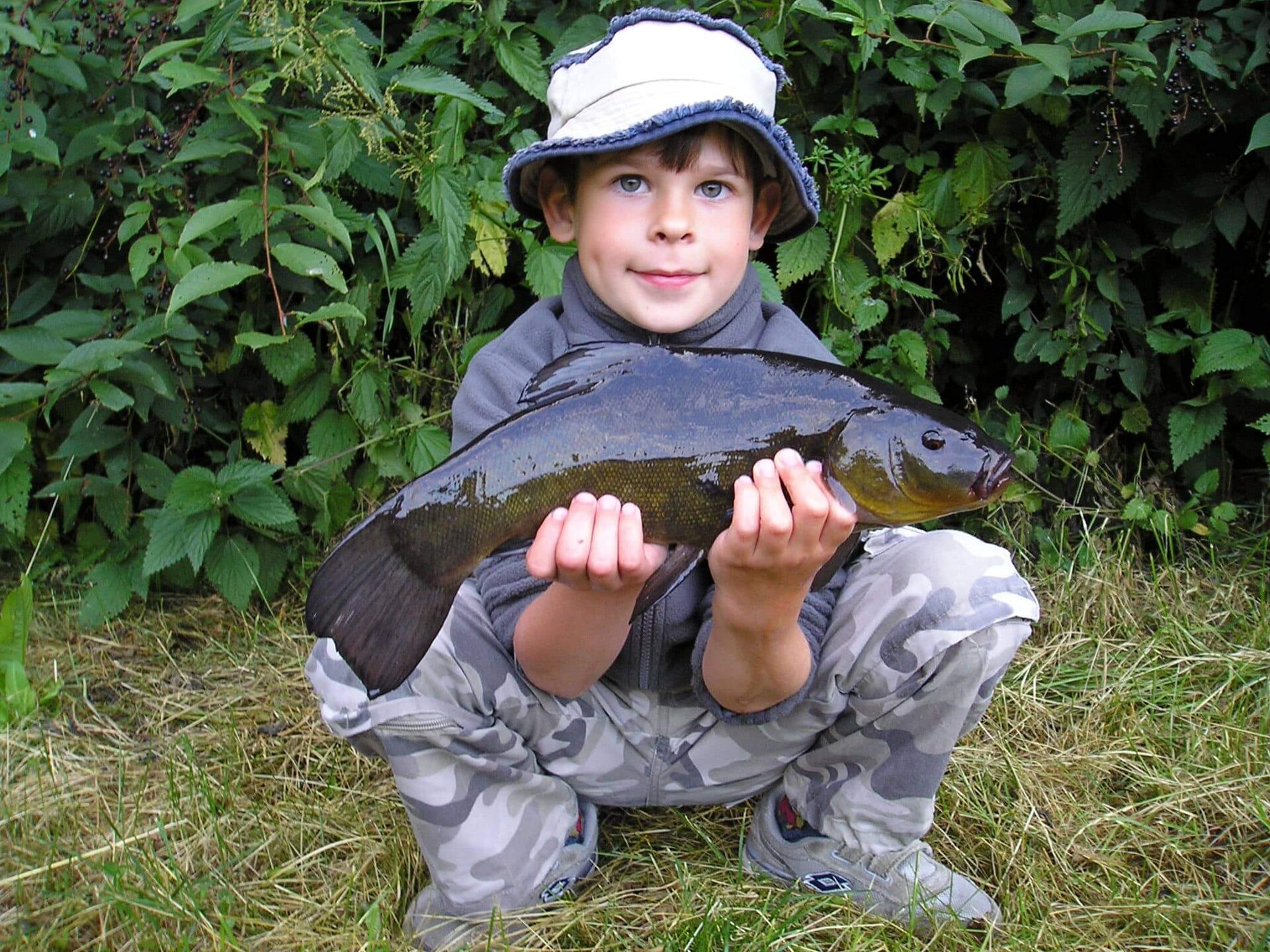
I believe the core of my relationship with fishing has remained the same. Of course, I’m an angler—so yes, the bigger the catch, the better. But that has never been the main point for me. From the very beginning, fishing hasn’t been about measurements or records. It’s about the stories and the adventures I experience by the water.
I truly hope it always stays that way, because that’s the real reason I go back to the water again and again—and why I always feel there is something new to discover.

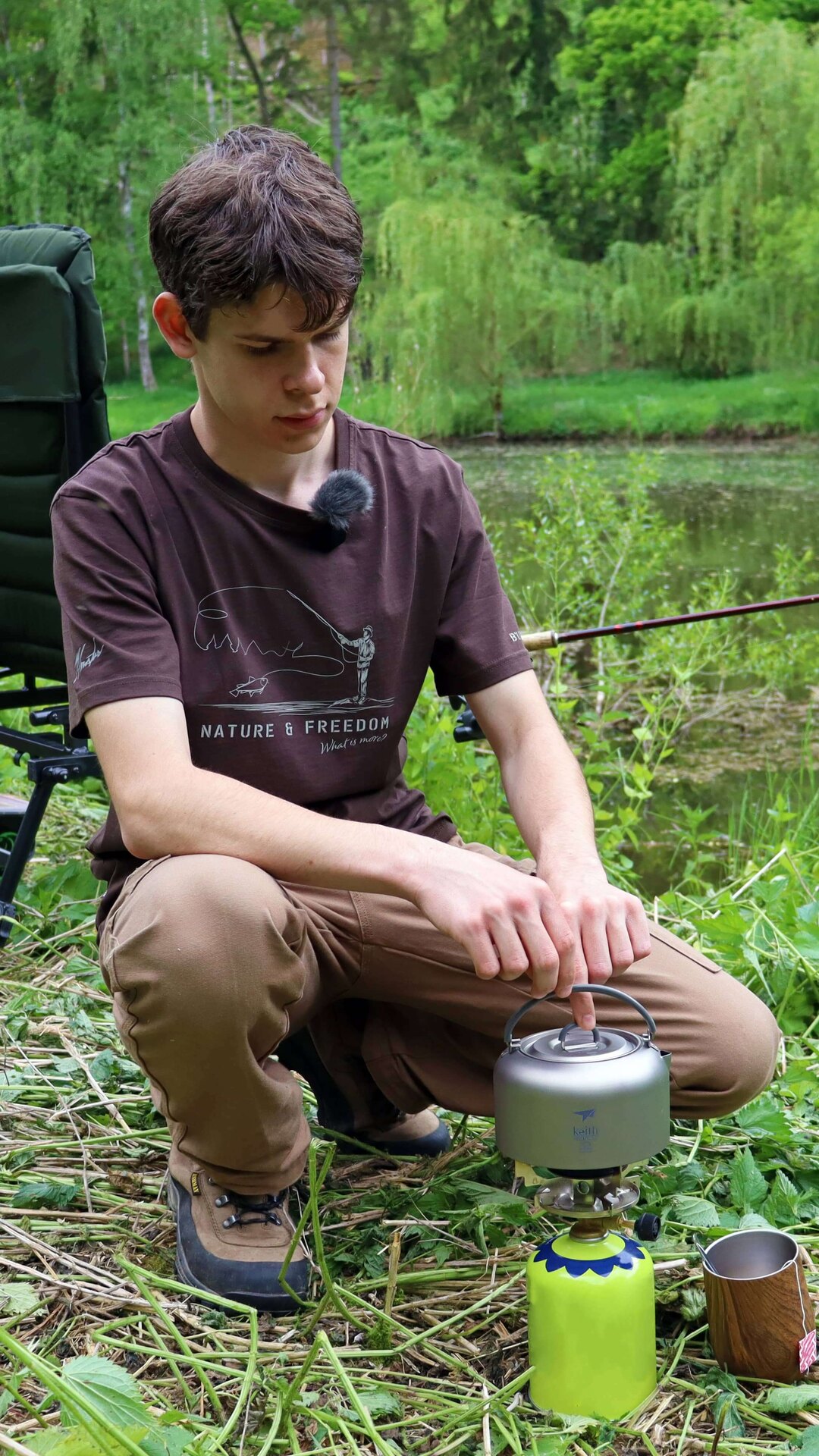
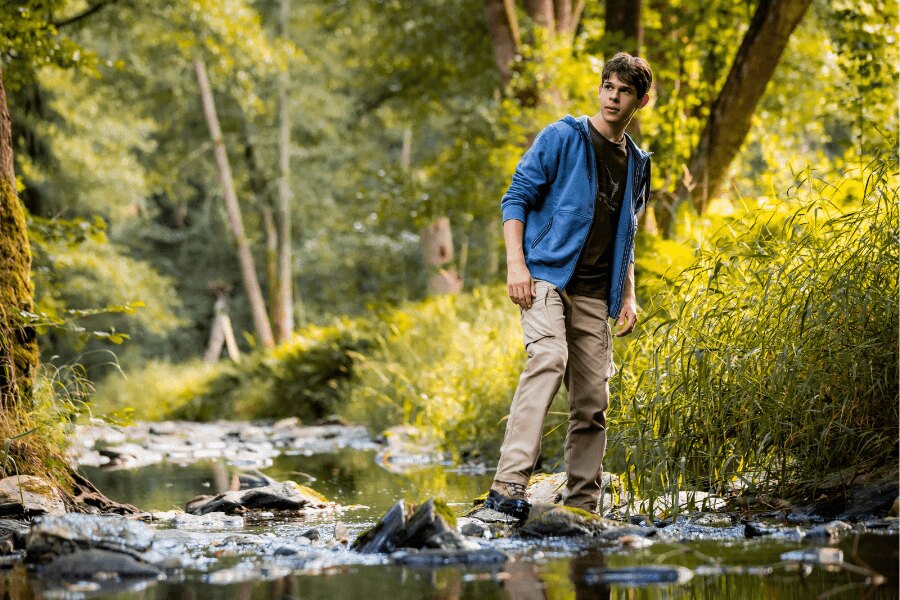
Matěj Houška working in the forest – for him, bushcraft and time in nature are as essential as fishing itself. In the wild, experience and dependable gear are what truly matter.
What led you to start filming and sharing your experiences with others?
It happened almost by accident. When I was eight and had just passed my fishing exams, I started going trout fishing in a small stream with my mum. To keep herself entertained, she bought a small camera to photograph the surrounding nature.
One day, it occurred to me that we could film my fishing and create a nice memory. So we did. I talked to the camera, my brother later helped us edit everything together, and that became my very first video—the first episode of a series called “With Matěj by the Water.”
People really liked it, so my mum and I quickly filmed another episode, this time about rudd, a species I’ve been catching since I was little. The real turning point came in 2019 with the launch of the first episode of my series Forgotten Waters. I was only eleven at the time. The project unexpectedly reached a large audience and became a huge personal milestone for me.
After that experience, I knew I wanted to continue creating—to share the stories and emotions I experience during my adventures. Now I’m seventeen, and that conviction only keeps growing stronger, mainly thanks to the supporters, the experiences filming has allowed me to have, and the incredible people I’ve met along the way.
In your project Forgotten Waters, you also uncover the history of the places you visit. Which story affected you the most?
There have been many powerful human stories—some of which had never really been told before.
While filming in a small village, I learned from local residents about a deeply moving event that took place at the end of the Second World War. A so-called “death march” passed through the area. When a woman from a nearby house saw the suffering of the prisoners, she gathered all the bread her family had and threw it over the fence to the starving men. She knew it could have had tragic consequences for her and her family.
But the story doesn’t end there. In the forested bends of the road, the guards briefly lost control, and several prisoners attempted to escape. One woman was tragically shot on the spot, but a few others managed to flee. That night, four of them knocked on the window of the same woman’s house. The family hid them, gave them food, clothes, and a place to sleep. The next morning, the escapees left to continue their journey home. The villagers immediately burned the prisoners’ clothing to erase any evidence.
Years later, two of the rescued men returned to thank the brave family. I’ve been told that reunion was incredibly emotional.

A dream taimen from the Mongolian wilderness. A moment Matěj had waited for since childhood – the pinnacle of an expedition where nature sets its own rules.
Where the Wilderness Sets the Rules
How does fishing in Mongolia differ from Czech waters, and what was the greatest challenge of the expedition?
I stepped into a completely different world. The entire expedition was an adventure from beginning to end. One realization stood out to me in particular: Mongolia is a land of contrasts in every sense.
What captivated me most was the raw wilderness. I traveled to one of the most remote regions of the country—places ruled by bears, wolverines, and above all wolves, which were often close by. Being in their constant presence was both awe-inspiring and slightly unsettling at the same time.
The first days were mainly about learning the river—understanding its character, choosing the right strategy, and navigating both the water and the surrounding terrain. In places, the river meandered through nearly impenetrable vegetation, almost like a green jungle. The only way to reach the best stretches was by rafting downstream.
Gradually, I managed to land a large lenok and several trophy-sized Amur pike—an endemic species of East Asia and a remarkable catch in its own right. But the taimen kept eluding me.
Things became even more complicated when I fell ill with a fever and lost two full days of fishing. Mentally, that was the hardest part of the entire expedition. Still, it felt as if the local spirits were on my side, because in the end, I finally hooked and landed the taimen.
While Czech nature is also full of mystery, Mongolia is on another level entirely. That, to me, is the biggest difference. You’re fishing in places you’ve never seen before, where the wilderness sets its own rules—and at the same time, you’re trying to outsmart a fish whose life remains surrounded by myth and mystery to this day.
What are the essentials you never leave for an expedition without?
There are three basic items I never head into the wild without: a knife, a fire starter, and a water filter. In my view, these are the absolute essentials every outdoorsman should carry.
Beyond that, I usually add a small survival kit, a compact first-aid kit, and any additional gear depending on the specific objective of the trip. Many times, this equipment has helped me in risky or potentially dangerous situations. Out there, reliability is not a luxury—it’s a necessity.
Respect as the Foundation
Do you see your work as a responsibility?
Absolutely. My goal is to share the stories and emotions I experience during my adventures, but also to inspire people. And because of that, it’s extremely important to me to inspire them in the right direction. Even more so knowing that many young children follow my work—they are the future, after all. That awareness makes the sense of responsibility very real for me.
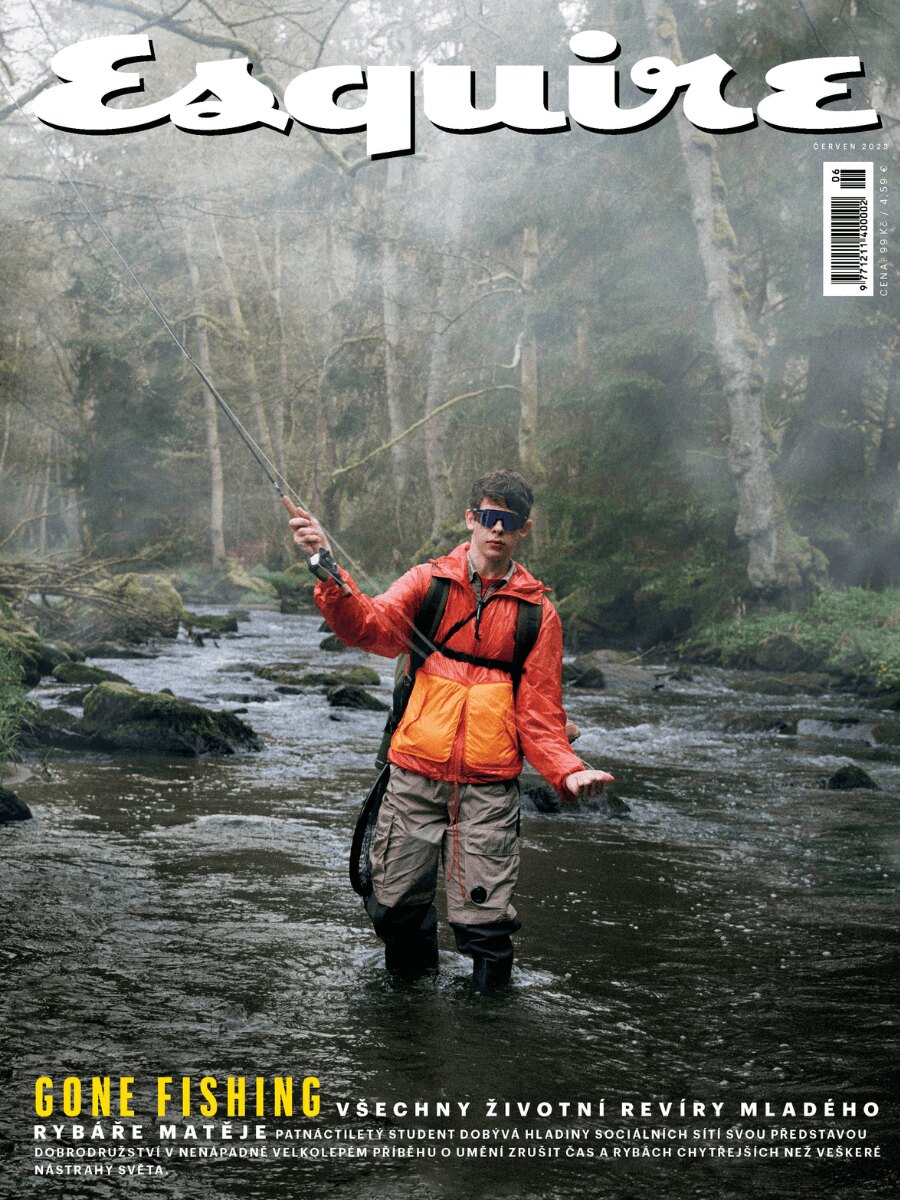
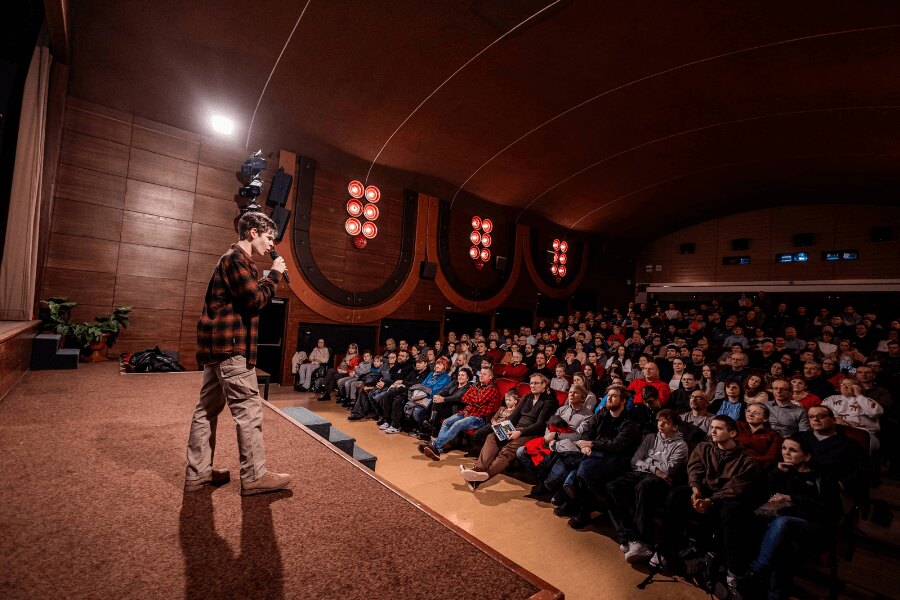
What does it mean to you to have been the first Czech angler featured on the cover of Esquire and mentioned in Wired?
It’s a tremendous honor. But I don’t see it purely as my personal success—I see it as a success for all Czech anglers and outdoorsmen. The fact that fishing and nature made it onto the cover of such a prestigious American magazine as Esquireis something truly special.
I also remember the photoshoot very fondly. I had never done a professional shoot before, and when a ten-person crew arrived—and out stepped Ben Renč, one of our top photographers who works with major international stars—I remember smiling to myself, thinking this was going to be interesting.
Me? Just an ordinary angler and outdoorsman—and now someone expects me to behave like a professional model. But right at the beginning, Ben said to me, “Matěj, just be completely natural. That’s all I want from you.”
And that’s exactly how it was. Everything felt relaxed, without pressure or pretense. I genuinely enjoyed the entire shoot with Ben and the team. What I didn’t expect, though, was the huge reaction that followed once the cover was published.
Which fish has stayed with you the most—and why? In a previous interview, you mentioned that you don’t eat fish. Could you elaborate?
Without a doubt, it’s the taimen I caught during last year’s expedition in Mongolia. There isn’t another creature on this planet I’ve longed to encounter as much as that one. For me, the taimen represented the greatest fishing dream I had carried since childhood. The moment it first surfaced during the fight is something I will remember for the rest of my life.
I’ve been releasing fish back into their natural habitat since I first started fishing. I live in a time and a situation where I don’t need to catch fish for survival. It makes me happy to see a fish swim away, continue its life, reproduce—and perhaps one day I might encounter its offspring.
That said, I have nothing against anglers who occasionally take a fish home for a meal. The problem arises when some “anglers” remove hundreds of kilograms of fish from the water in a single year, including trophy specimens that should clearly be released.
Another serious issue is the way fish are sometimes handled. Some anglers keep them confined in keep nets for extended periods just to take photographs, or handle them carelessly. If you release a fish, it must be done properly and gently, so the fish doesn’t suffer or die later.
Ethical angling also includes behavior by the water. Loud, intoxicated anglers, littering, aggression, or noisy barbecue parties—none of that belongs there. A responsible angler should move quietly, respect others nearby, and blend into nature as much as possible.
What Truly Matters in the Wilderness
Your approach is very practical—gear has to work, not just look good. What advice would you give to people who want to head into nature as prepared as you are?
That’s absolutely true—my gear simply has to work. I need to be able to rely on it in every situation. There’s a fundamental difference between heading out for a few hours into local countryside and spending extended time in remote wilderness abroad, far from civilization and medical assistance.
That’s where you truly find out what makes sense—and what is just superficial design. Gear should always be chosen according to the specific purpose of the expedition. For me, that principle is clear.
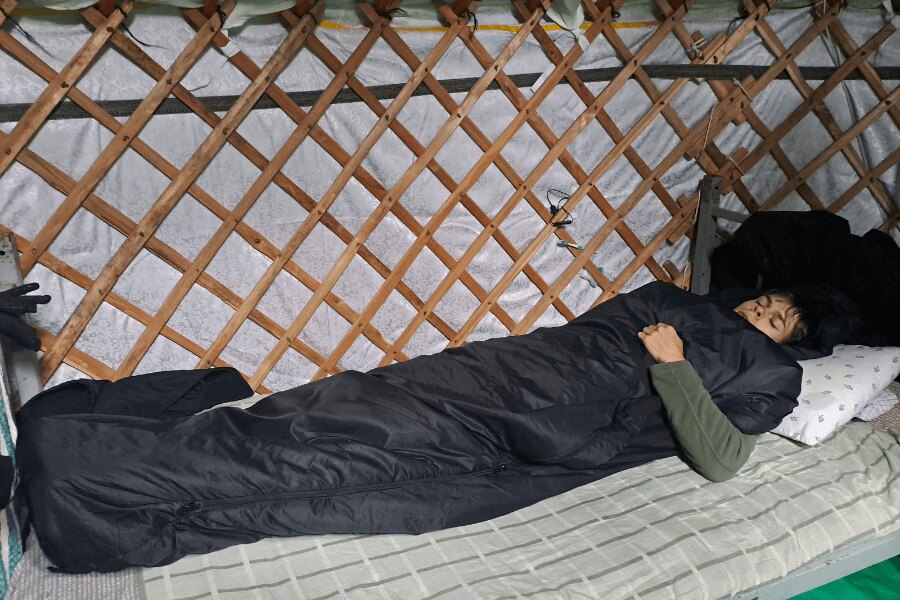
I’m genuinely grateful for my cooperation with RIGAD. I use their equipment on all of my trips and expeditions, and I know I can depend on it—even in the most demanding conditions, such as those I experienced in the Mongolian wilderness.

Gear you can rely on – from a durable bag and sleeping bag to a headlamp and essential equipment for demanding conditions. In the wilderness, performance matters more than appearance.
Between the Camera, the Guitar, and the Future
What is the greater challenge: filming a quality video in the wilderness, or simply being there and experiencing it without a camera?
Creating a meaningful film and story in nature is both technically and mentally demanding. You’re constantly thinking about light, sound, battery life, weather conditions, protecting your equipment, and maintaining your own focus. Often, you have to go against your intuition because you’re thinking ahead—about the shot, continuity, the narrative. In a way, you filter the experience through the lens of a camera.
Being there without a camera is a different kind of challenge. Of course, you experience it more fully—you’re more present, more aware of the space, the silence, the small details around you. On the other hand, you lose the opportunity to share it with your audience, to pass on experiences and moments they might otherwise never feel themselves.
One approach pushes you to perform; the other encourages you to slow down and accept reality as it is. That’s why both have their meaning. Each in its own way—and neither is easier.
When you’re not fishing or filming, what do you enjoy doing in your free time?
Honestly, I don’t have much “free” time—school is still a big part of my life. I’m in my second-to-last year of grammar school, and with an individual study plan, it’s becoming increasingly demanding, especially in subjects where I miss regular classroom instruction.
Outside of nature and filmmaking, though, my biggest passion is music—specifically playing the guitar.
A classic final question: Where do you see yourself in five years—in the wilderness, by the water, on stage, or somewhere entirely different?
Honestly, I don’t see myself in one specific place. I just hope that in five years I’ll still be able to do the things that fulfill me—whether that’s in nature, by the water, on stage, or in front of the camera—and to do them with people who truly matter.
If that happens, and I can continue pursuing my dreams, that alone will already be another dream come true.
Matěj Houška proves that fishing doesn’t have to be about trophies—it can be about stories, respect for nature, and the courage to go further than most of us ever will. Whether you’re heading out to your local waters or dreaming of your own wilderness expedition, one thing remains the same: reliable gear and the right mindset make all the difference.
👉 Planning your next adventure? Explore equipment that performs both in familiar landscapes and in the most demanding wilderness conditions.
🔵 Follow Matěj
You can follow his expeditions, new episodes, and behind-the-scenes stories on his official channels:
🌐 Website: www.matejhouska.cz
📷 Instagram: @matejhouska_official
📘 Facebook: Matěj Houška – Adventurer














Readers are further interested