

- Outdoor Clothing and Footwear

- All in the category Outdoor Clothing and Footwear
- Footwear

- Jackets

- Military Blouses

- Pants

- Functional clothing

- Sweatshirts

- Shirts

- Hawaiian & Lifestyle Shirts

- T-Shirts

- Shorts and Bermuda

- Overalls

- Caps and head coverings

- Gloves

- Socks

- Belts

- Suspenders

- Scarves, shawls, neckwear

- Raincoats, ponchos

- Women's clothing

- Children's clothing

- Clothing Care and Maintenance

- Patches & Insignia

- Vests

- Camping & Hiking

- All in the category Camping & Hiking
- Backpacks

- Bags, Cases & Waist Packs

- Sleeping in nature

- Cookers, grills

- Lighting a fire

- Outdoor Dishes and Tableware

- Dining in nature (Food for the journey)

- Survival kit

- Compasses

- Climbing equipment

- Flashlights

- Camping furniture

- Eye-glasses

- Telescopes

- Hydration

- Water purification

- Small Equipment and Essentials for Survival

- Electronics and accessories for mobile phones

- Watches

- Cases

- Paracords

- Wallets

- Towels

- Solar showers

- Waterproof notebooks

- Mosquito and Insect Protection

- Foot, hand, and body warmers

- Repair Kits and Adhesive Tapes

- Boating equipment

- Health, protection

- Tactical Gear

- All in the category Tactical Gear
- Plate Carriers and Tactical Accessories

- Load-bearing harnesses

- Tactical vests

- Tactical cases and pockets

- Ballistic protection

- Hearing protection

- Protection

- Tactical and military backpacks

- Tactical and combat belts

- Tactical Eyewear

- Flashlights for soldiers and police

- Helmets, coverage

- Camouflage

- Gas masks and protective equipment

- Medical equipment

- Boxes, cases

- Battering rams, crowbars

- Gear for dogs

- Shooting Gear

- All in the category Shooting Gear
- Shooting Glasses

- Weapon bags

- Shooting gloves

- Gun Cases

- Weapon Slings

- Optical sights

- Rangefinders

- Gun flashlights and lasers

- Cleaning, maintenance

- Gun waist bags

- Shooting bags

- Shooting mats

- Boxes and cases for ammunition

- Training equipment for shooting

- Bullet traps

- Speed loaders

- Knives and Tools

- Self-defence

- Firearms and Ammunition

- Other

- By interest


Helikon-Tex Brings Back the Legendary 6-Color Desert “Chocolate Chip” Camouflage
The 6-Color Desert camouflage pattern, better known by its nickname Chocolate Chip, remains one of the most iconic desert camouflage designs ever used by the U.S. military. Although most people primarily associate it with the Gulf War era, its history began much earlier — and from the very beginning, it was closely tied to the search for effective concealment in the unique conditions of desert warfare.
From Experimental Pattern to Icon
The development of the 6-Color Desert pattern was driven by the need for camouflage suited to dry, rocky, and open terrain. Its design was heavily inspired by the landscapes of the American Southwest — light sand, scattered rocks, sharp contrasts, and the irregular textures typical of desert environments.

The legendary 6-Color Desert camouflage, better known as Chocolate Chip, returns in a modern interpretation by Helikon-Tex.
1980s: Gradual Introduction into Service
Throughout the 1980s, the pattern began appearing with selected units and during training exercises in desert environments. Over time, it became an increasingly recognizable part of U.S. military equipment intended for operations in arid terrain.
1990–1991: The Gulf War Era
The real breakthrough came during Operations Desert Shield and Desert Storm. It was during this period that Chocolate Chip gained worldwide recognition and became one of the defining visual symbols of the conflict in the Persian Gulf.
After 1991: End of Service, Beginning of a Legend
Although the pattern was gradually phased out from active military service, it never disappeared from the minds of military enthusiasts. To this day, Chocolate Chip remains one of the most recognizable American camouflage patterns ever created and continues to hold a strong place among fans of military history, shooting culture, and the outdoor community.

Chocolate Chip camouflage was originally developed for rocky desert terrain and later became iconic during the Gulf War era.
Why Is It Called “Chocolate Chip”?
The Chocolate Chip nickname comes from the pattern’s distinctive dark spots, which resemble chocolate chips scattered across a cookie. Those high-contrast shapes gave the camouflage its unmistakable appearance and helped turn it into one of the most recognizable military patterns ever created.
The camouflage itself was designed specifically for rocky desert terrain. It combines light sand tones with brown, white, and black elements intended to break up the wearer’s silhouette in dry, open environments.
The lighter areas of the pattern were meant to imitate small rocks and pale fragments of desert soil, while the darker shapes represented shadows and the irregular textures of the terrain. The result was a bold and highly distinctive camouflage system that stood out from most military patterns of its era.

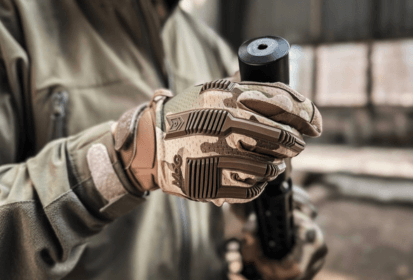
Helikon-Tex brings the iconic Chocolate Chip camouflage pattern to modern tactical and outdoor gear.
The Connection to the Legendary DNC Pattern
The 6-Color Desert pattern was later followed by the development of DNC (Desert Night Camouflage), created as part of a broader camouflage system intended for both daytime and nighttime operations in desert environments.
Both patterns share a similar design philosophy focused on disrupting shapes and blending into the texture of the terrain. While Chocolate Chip is defined by its irregular “chip-like” spots, DNC replaced them with a darker grid-like structure that almost resembles early pixelated camouflage.
DNC’s darker color palette was specifically developed to perform better during night operations and to reduce visibility against older generations of night vision devices.

The DNC (Desert Night Camouflage) pattern evolved from the 6-Color Desert concept and was developed specifically for nighttime operations in desert environments.
The Return of a Classic with Helikon-Tex
Today, the legendary 6-Color Desert pattern returns in a modern interpretation by Helikon-Tex, bringing this iconic camouflage onto contemporary clothing and gear. The result is a combination of unmistakable military heritage, timeless visual identity, and modern materials suited for the range, outdoor use, and everyday wear.
For fans of classic American camouflage patterns, Chocolate Chip remains one of the boldest and most instantly recognizable designs ever created.


Readers are further interested